- Published on
How Bridge and Warehouse Lines Will Shape HUD Healthcare Lending in 2026
- Authors

- Name
- Weslen T. Lakins
- @WeslenLakins
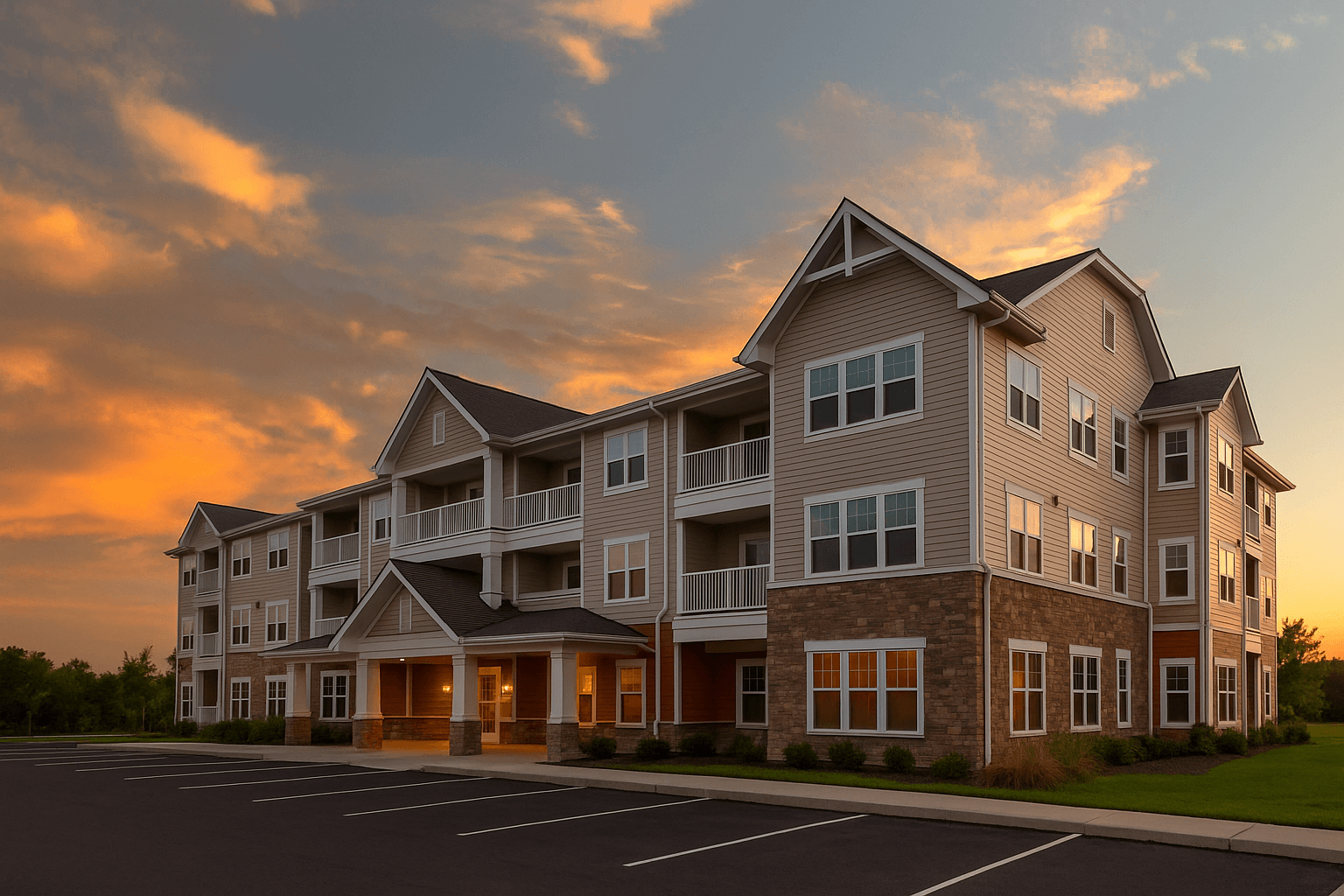
By late 2025, HUD’s Section 232 Mortgage Insurance for Residential Care Facilities is no longer a niche product. HUD’s inspector general describes a portfolio of more than 3,600 insured loans with an unpaid principal balance exceeding $32 billion, concentrated in skilled nursing, assisted living, and other residential care facilities.1 FHA’s broader multifamily and healthcare book has been growing for years, reinforcing HUD’s role as a countercyclical provider of long-dated, fixed-rate credit when private markets are volatile.2 Together, those facts explain why Section 232 is now a core part of the capital stack for long-term care operators rather than a one-off refinancing option.
Mid-year data from HUD’s Office of Residential Care Facilities and industry press make clear that FY 2025 is on track to be one of the most active years for Section 232 in the last decade. One trade publication, drawing on ORCF data, reports that in the first 26 weeks of FY 2025 lenders closed 130 loans under the healthcare mortgage insurance program, up from 85 during the same period in FY 2024—a 53 percent increase.3 Over that same half-year, HUD issued 177 loan commitments totaling roughly 3.1 billion and potentially reach $4 billion or more.4 Those commitments are heavily weighted toward Section 232/223(f) refinancings and acquisitions, with all but three mid-year applications in that bucket.5
The surge is not happening in a vacuum. Analysts have documented record or near-record skilled-nursing and seniors-housing M&A activity in recent years, with one healthcare transaction tracker counting roughly 176 seniors-housing and care deals in the first quarter of 2025 alone.6 At the same time, operating fundamentals are gradually improving as occupancies climb off post-pandemic lows and Medicaid rate increases bolster coverage ratios at many facilities.7 In that environment, HUD’s fixed-rate, long-amortization, assumable debt is the natural permanent take-out for sponsors who first need to acquire, stabilize, or re-tenant an asset using faster, more flexible private capital.
HUD itself is trying to accelerate that pipeline. In June 2025, the agency announced a new Section 232 “Express Lane” for lower-risk transactions—generally smaller loans, experienced operators with clean FHA histories, and properties with limited “special use” revenue—with the explicit goal of shaving months off the traditional review timeline.8 That innovation will help at the margin, but it does not eliminate the need for bridge-to-HUD and warehouse executions. As we move into 2026, the defining challenge for lenders and their counsel will be less about “whether” to use HUD and more about synchronizing bridge, warehouse, HUD, and accounts-receivable (A/R) capital in a way that holds up under regulatory, intercreditor, and enforcement scrutiny.
This note looks at why borrowers are flocking to 232/223(f), how lenders are using bridge and warehouse capital to feed that volume, and where the legal pressure points will sit in 2026 for lender-side counsel who draft and negotiate these structures.
What 2025 Told Us About HUD Healthcare Lending
Section 232 was designed to insure private lenders making loans to nursing homes, assisted living facilities, and similar residential care properties, protecting lenders against losses in exchange for compliance with federal underwriting and regulatory requirements.9 For years, that program was important but relatively narrow. Today, it is one of the few places where long-term care sponsors can reliably lock in 30- to 40-year, fully amortizing debt with fixed coupons and no balloon risk, backed by a federal insurance wrap that makes the loans attractive to Ginnie Mae securitizations and other long-duration investors.10
The data from FY 2024 and the first half of FY 2025 show a clear acceleration. HUD and industry commentators report that FY 2024 saw about $3.1 billion in healthcare mortgage insurance volume, and mid-2025 commitment statistics already rival full-year totals from less active cycles.11 A July 2025 feature aimed at seniors-housing lenders summarizes ORCF data this way: over the first half of FY 2025, loan commitments jumped roughly 45 percent year-over-year, and application counts increased by more than 50 percent, driven almost entirely by 232/223(f) transactions.12
Macro credit data underscore the same trend. A mid-2025 analysis of HUD multifamily and healthcare lending noted that, through the first nine months of the federal fiscal year, total lending under HUD’s multifamily and healthcare programs reached roughly $10.4 billion—about 50 percent higher than the comparable prior-year period—with 2025 third-quarter volume alone up more than 11 percent year-over-year.13 Even if only a portion of that growth is attributable to Section 232, it confirms that FHA-insured credit has become a central channel for capital into healthcare real estate.
For lenders and their counsel, the practical message heading into 2026 is straightforward: HUD healthcare execution is not a side strategy. It is the end state that many sponsors, private-equity platforms, and operator-borrowers are designing toward from day one of a transaction.
Why Operators Still Flock to HUD in a Higher-Rate World
The continued gravitation toward Section 232 and, in particular, 232/223(f) refinancings and acquisitions reflects a simple risk-management calculus.
First, HUD’s long amortization and fixed-rate structure offers something the private markets generally do not: term debt that can run up to 40 years in some cases, with fully amortizing or long-tail schedules that substantially eliminate balloon risk.14 In a world where base rates have moved sharply upward and term sheets often come with shorter tenors, extension fees, and refinance tests, locking in a HUD-insured execution is a way for operators and sponsors to de-risk both interest-rate and refinancing exposure over the full remaining economic life of a facility.15
Second, 232/223(f) financing remains nonrecourse in the traditional sense, subject only to well-understood “bad-boy” carve-outs and limited carve-out guaranties.16 That is a meaningful contrast to some bank and private-credit facilities in the long-term care space, which may ask for broader recourse, net-worth and liquidity covenants at the sponsor level, or cross-defaults across large portfolios.17
Third, HUD-insured loans are assumable (with HUD approval), which gives sponsors a future exit option that can be extremely valuable if rates remain higher for longer.18 A new buyer who can step into an in-place, long-term fixed facility at an attractive coupon may be willing to pay a higher purchase price than one who must refinance into the market of the day. That dynamic is especially important in skilled nursing and seniors housing, where much of the business plan upside comes from operational improvements rather than ground-up development.
Finally, in a regulatory climate where state health departments, CMS, and DOJ all take an active interest in long-term care quality, the HUD underwriting and monitoring framework itself can be a selling point. HUD’s healthcare portfolio has historically operated at negative credit subsidy—meaning it returns more in premiums and recoveries than it pays out in claims19—and HUD OIG’s ongoing audit of Section 232 nursing home portfolios reflects a continued focus on risk management.20 For lenders, that oversight is a constraint, but for borrowers it can help signal stability to limited partners, bondholders, and other capital providers.
How Bridge and Warehouse Capital Are Feeding 232 Volume
If HUD is the “end state,” it is rarely the starting point. The same mid-2025 article that flagged record-setting commitment volume also quoted a bridge lender whose firm has a pipeline of more than $2 billion in loans expected to refinance into Section 232 over the next two to three years.21 That is emblematic of a broader pattern: sponsors use short-term, often floating-rate bridge or warehouse capital to acquire, stabilize, and reposition facilities, then execute a HUD take-out once operations, surveys, and financials support long-term debt.
In practice, the bridge-to-HUD sequence often looks like this. A sponsor identifies a skilled-nursing or seniors-housing opportunity—frequently in the wake of a distressed sale, nonprofit divestiture, or operator transition that would not immediately pass HUD underwriting.22 A private-credit fund, specialty finance platform, or bank provides a one- to three-year bridge facility, secured by a first-priority mortgage on the real estate, a lien on fixtures and equipment, and a pledge of equity in the property-owning entity, and often coupled with an A/R revolver secured by receivables and cash.23 The operator uses that capital to implement new clinical and operating protocols, invest in capex, and work through survey issues. Once operating metrics, survey histories, and trailing cash flows are sufficient, the sponsor applies for a 232/223(f) loan to refinance the bridge facility.
On the warehouse side, lenders who originate 232 loans for eventual pooling into Ginnie Mae certificates24 may use warehouse lines or participation facilities to fund loans from closing through endorsement and securitization.25 These lines are typically secured by pledges of HUD-insured or to-be-insured notes and associated collateral packages, with eligibility criteria that mirror HUD and Ginnie Mae requirements.26 In a year like FY 2025, where commitments and applications significantly outpace recently observed levels, warehouse capacity and eligibility definitions can be as important as HUD approvals themselves in determining how much 232 volume a lender can actually carry into the securitization market.
HUD’s new Express Lane will, if it proves durable, change the calculus at the margin. Under the program as described in mid-2025 reports, borrowers that meet defined “low-risk” criteria—including size caps (generally $50 million, with a higher cap in New York City), clean FHA claim histories, and experienced operators with at least two years in place—may move through a streamlined application track that trims months from processing timelines.27 For those transactions, bridge tenors can be shorter, rate-cap and hedging costs may be lower, and warehouse advance periods can be tailored more precisely to expected endorsement dates. But Express Lane does not apply to every deal, and it does not eliminate legal complexity; it simply changes the timing assumptions counsel should build into their documents.
The Legal Pressure Points in 2026 Capital Stacks
For lender-side counsel, the hard problems in 2026 will sit less in HUD program eligibility and more at the intersections between HUD lenders, A/R lenders, bridge lenders, and, in some cases, mezzanine lenders and preferred-equity providers. Three clusters of issues deserve particular attention.
First, there is the question of priority and control among HUD and non-HUD creditors. HUD’s regulatory framework is built on the premise that the HUD-insured mortgage enjoys a first-priority lien on the real estate, fixtures, and certain related collateral, and HUD uses standardized regulatory agreements and security instruments to preserve that position.28 Bridge lenders and A/R lenders, by contrast, are often securing not only bricks and mortar but also going-concern value, deposit accounts, intellectual property, and enterprise-level collateral. The resulting intercreditor and subordination agreements must reconcile HUD’s required forms and riders with commercial expectations about remedies, cash-flow sweeps, and control over bank accounts. When designating which lender has dominion over rent and receivables collections—and when and how those flows can be redirected—counsel need to keep both HUD program requirements and Article 9 enforcement mechanics in view.
Second, covenant alignment across facilities with different risk tolerances will become more important as capital stacks become more layered. Bridge and mezzanine capital are priced on the assumption of higher risk and shorter duration; HUD debt is not. It is tempting to give the bridge or mezzanine lender aggressive financial covenants—tight debt-service coverage ratios, occupancy triggers, additional indebtedness caps—while leaving HUD documentation closer to programmatic minimums. But if breaches of those “outer layer” covenants feed cross-defaults into the HUD facility or vice versa, the structure can become brittle. Heading into 2026, when Medicaid rate resets, labor costs, and survey outcomes are all live variables, lenders and counsel should be deliberate about which covenants truly need to be cross-defaulted and which should be ring-fenced to preserve flexibility while the HUD take-out is pending.
Third, collateral allocation between real estate and operations will remain a recurring source of friction. Long-term care facilities are operating businesses layered on top of real estate. Section 232 focuses primarily on the bricks-and-mortar asset but also reaches into operations through regulatory agreements with both the borrower and the operator, as well as through master leases or long-term governance documents.29 A/R lenders, by contrast, are interested in reimbursement streams from Medicare, Medicaid, and managed-care payors, and they may insist on first-priority liens on receivables, lockbox and deposit-account control, and tight controls over changes of operator. Where a HUD take-out is contemplated, those operational rights must be structured so that HUD’s requirements around operator qualifications, single-purpose entities, and “bad acts” enforcement can still be satisfied without triggering collateral leakage or unintended defaults under the A/R facility.
HUD OIG’s ongoing work on Section 232 nursing home portfolios is a reminder that regulators are paying attention to how these structures behave in distress. The audit’s stated objective is to assess whether ORCF adequately identifies and mitigates risks in portfolio-level lending, and it explicitly notes the program’s size and complexity.30 That background should inform how lenders and counsel document enforcement mechanics, cash-flow sweeps, and change-of-ownership (CHOW) events in multi-tranche 232-linked capital stacks.
How Lenders and Counsel Can Stay Ahead in 2026
Given that backdrop, what does it mean for lenders—and their lawyers—to stay ahead of the curve in 2026 rather than simply react to HUD volume?
One priority is to design “HUD-forward” bridge and warehouse documentation. If the commercial reality is that the bridge or warehouse facility exists primarily to carry the asset into a 232/223(f) take-out, loan documents should say so. Conditions to extension options and final maturity should be tied explicitly to progress along the HUD path: timely application submission, firm-commitment milestones, completion of required repairs, resolution of surveys, and maintenance of operator eligibility. Intercreditor agreements should be drafted with the HUD forms in mind from the outset, rather than retrofitted at the closing table when the take-out lender or ORCF raises an objection.
A second focus area is covenant and reporting architecture that supports both HUD underwriting and future securitizations. HUD-insured loans that are ultimately pooled into Ginnie Mae securities or otherwise placed with long-term institutional investors will need clean, consistent financial reporting, survey and licensure data, and operator-level metrics over time.31 Lenders who build those data and reporting requirements into their bridge and A/R facilities from day one—rather than trying to back-solve them later—will be better positioned to execute smooth take-outs and minimize surprises during due diligence.
Third, lenders should take the Express Lane criteria seriously as a design target, even if not every deal will qualify. The early descriptions of the program emphasize low-risk characteristics: no history of FHA claims, seasoned operators, moderate leverage, and manageable special-use exposure.32 For sponsors and lenders who can structure transactions around those parameters, the payoff may be materially shorter processing timelines and lower bridge-period execution risk. For transactions that cannot meet every criterion, counsel can still use those benchmarks as a checklist for risk factors to address in covenants, reserves, or additional credit support.
Finally, 2026 is likely to be the year when the intercreditor “boilerplate” in HUD-related healthcare deals stops being boilerplate. As portfolio-level Section 232 volumes grow, and as more transactions layer in bridge, A/R, and mezzanine capital, disputes over control, cash, and collateral will inevitably test whatever agreements parties signed in earlier years. Lenders and their counsel who invest now in carefully harmonized intercreditor forms—aligned with HUD regulations, Ginnie Mae guides, and Article 9 remedies, and tailored to the realities of long-term care operations—will be better positioned to both win deals and manage workouts when cycles turn.
The upshot is that FY 2025’s “banner year” headlines are only the start. For lenders and lawyers on the HUD healthcare side, 2026 will reward those who treat Section 232 not as a one-off program but as the organizing spine of the capital stack—and who draft every bridge, warehouse, and A/R facility with that spine in mind.
Footnotes
Off. of Inspector Gen., U.S. Dep’t of Hous. & Urban Dev., HUD’s Oversight of Section 232 Nursing Home Portfolios (ongoing work, initiated Apr. 15, 2024), https://www.hudoig.gov. ↩
See, e.g., U.S. Dep’t of Hous. & Urban Dev., Mortgage and Loan Insurance Programs 25–27 (FY 2017 budget justification) (describing the countercyclical role of FHA’s multifamily and healthcare insurance portfolio and its unpaid principal balance growth). ↩
Hayden Spiess, Why FY 2025 Could Be a Banner Year for HUD Healthcare Lenders, Seniors Hous. Bus. (July 21, 2025). ↩
Id. (noting FY 2025 loan volume is on pace to significantly surpass the approximately 4 billion or more). ↩
Id. (reporting 228 applications in the first half of FY 2025, all but three for Section 232/223(f) loans). ↩
See Press Release, LevinPro HC, Seniors Housing & Care Acquisitions Reach 176 Transactions in Q1 2025 (2025). ↩
See Matt Valley, Why Acquisitions Market Could Thrive in ’25, Seniors Hous. Bus. (Feb. 26, 2025). ↩
See HUD “Express Lane” to Cut Months From Process, But Senior Living May Struggle to Qualify, Senior Hous. News (June 20, 2025), https://www.retirementcommunityliving.com. ↩
See Off. of Residential Care Facilities, U.S. Dep’t of Hous. & Urban Dev., Section 232 Mortgage Insurance for Residential Care Facilities (program description), https://www.hud.gov/program_offices/housing/mfh/progdesc/healthcare (last visited Dec. 8, 2025). ↩
See Ginnie Mae, Multifamily REMIC Pass-Through Securities Base Offering Circular 1–5 (July 1, 2023). ↩
Spiess, supra note 3. ↩
Id. ↩
See QDR, HUD Lending Against Healthcare Properties Skyrockets in 2025 (Sept. 2025) (citing Trepp data for nine months of FY 2025, with total multifamily and healthcare HUD lending of approximately $10.42 billion and roughly 50 percent year-over-year growth). ↩
See 24 C.F.R. pt. 232 (eligibility and underwriting requirements for Section 232 mortgage insurance, including maximum terms and amortization). ↩
See U.S. Fed. Reserve, Summary of Economic Projections (Sept. 2025) (projecting higher-for-longer rate path); Spiess, supra note 3. ↩
See HUD, Sections 232 and 242 Regulatory Agreements and Security Instruments (standard form documents for healthcare facilities, including nonrecourse structures with carve-out guaranties). ↩
See Arnold & Porter, Capital Snapshot: July 2025 6–8 (July 2025) (describing tighter credit conditions and lender reactions, including increased scrutiny of healthcare credits). ↩
See HUD, Section 232 Handbook ch. 3 (describing assumptions of insured loans and HUD approval process). ↩
See Off. of Healthcare Programs, U.S. Dep’t of Hous. & Urban Dev., LEAN Update 3 (Mar. 7, 2018). ↩
Off. of Inspector Gen., supra note 1. ↩
Spiess, supra note 3 (quoting Jason Dopoulos of Ikaria Capital Group on a bridge-loan pipeline expected to refinance into HUD over the next two to three years). ↩
See Nonprofits Fight to Survive, Sell Properties to More Stable, For-Profit Entities, Senior Hous. News (Feb. 5, 2025), https://www.retirementcommunityliving.com. ↩
See Press Release, Vium Capital, Vium Capital Ranks No. 2 Overall in HUD LEAN Rankings and No. 3 in Seniors Housing & Healthcare for Fiscal 2024 (Dec. 2024). ↩
See Ginnie Mae, supra note 10. ↩
See Citigroup & Ginnie Mae, Offering Circular Supplement: Guaranteed Multifamily REMIC Pass-Through Securities 2–3 (June 24, 2024). ↩
Id. ↩
HUD “Express Lane” to Cut Months From Process, supra note 8. ↩
See 24 C.F.R. §§ 232.3, 232.11; HUD model healthcare security instruments. ↩
See HUD, Section 232 Healthcare Facility Regulatory Agreements (standard borrower and operator regulatory agreements). ↩
Off. of Inspector Gen., supra note 1. ↩
See Ginnie Mae, Multifamily MBS Guide chs. 31–32 (describing servicing, reporting, and pooling requirements for FHA-insured multifamily and healthcare loans). ↩
HUD “Express Lane” to Cut Months From Process, supra note 8. ↩